F1 · Foundations
The Complexity Model
Amplify or Cancel - Your Technical Choices Matter
Overview
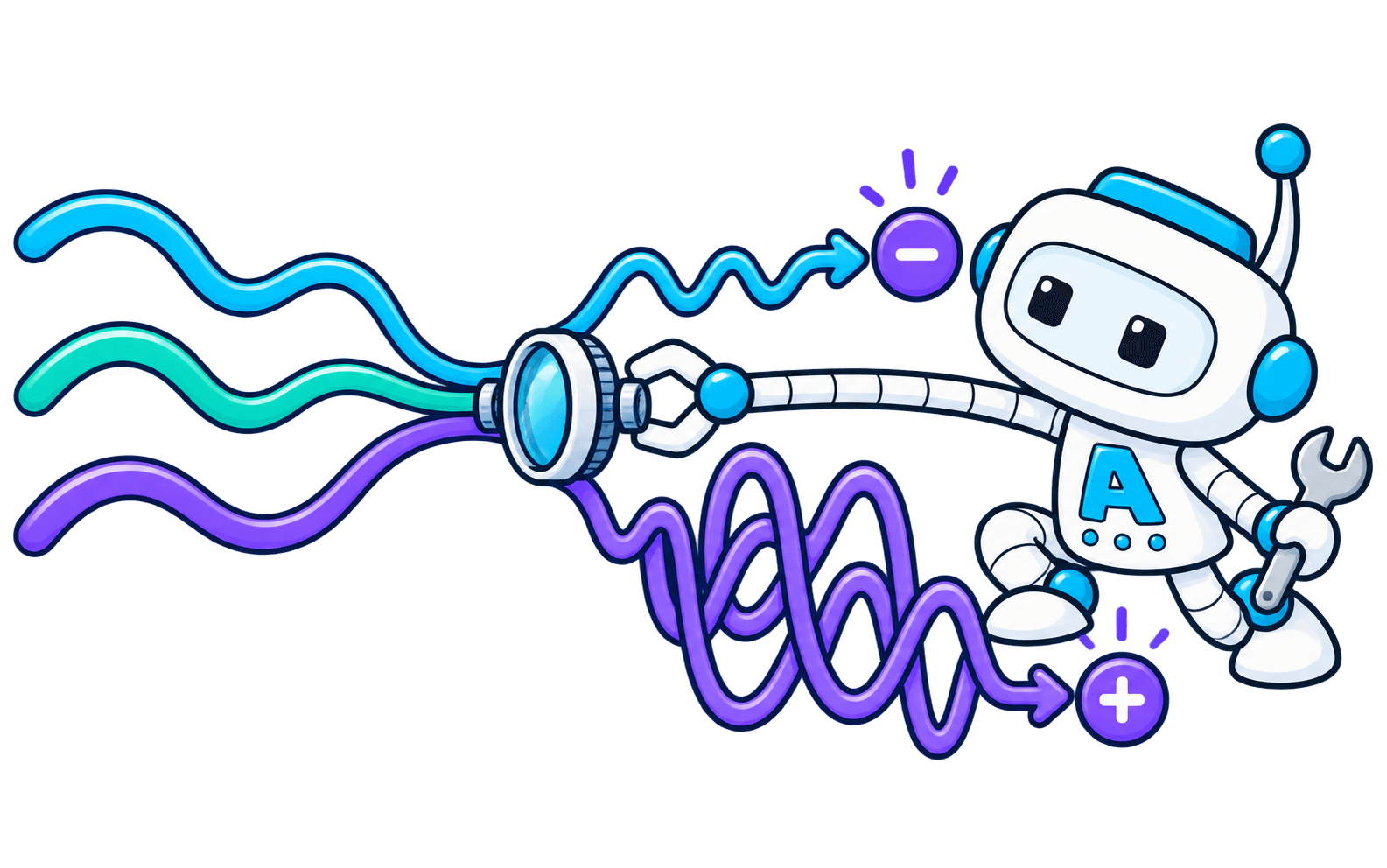
Every system starts with inherent complexity from three sources: Non-Functional Requirements (what the system must handle), Natural complexity (the problem space itself), and Domain complexity (the business rules). Think of this incoming complexity like sound waves.
Your technical choices act as a function f(x) on these waves. Good choices cancel complexity—they make inherent challenges manageable. Poor choices amplify complexity—they take existing challenges and make them worse.
When to use
- Starting a new project, evaluating technology choices
- Assessing why a system feels harder than it should
- Onboarding team members to architectural fundamentals
Quick assessment
- Are you fighting your architecture more than solving business problems?
- Are infrastructure costs growing faster than business value?
- Does every change require touching multiple systems?
- Does debugging require a PhD in distributed systems?
In practice
How it works
Make it work
List the unavoidable constraints first. Compare total delivery and operating effort, including the new coordination each tool creates.
The trade-off
Extra tools can move complexity elsewhere rather than remove it. Count the total cost.
Which choice removes more complexity than it adds?
Key patterns
The Three Sources:
- Non-Functional Requirements: Performance demands, scale expectations, security needs, compliance requirements
- Natural Complexity: Some problems are just hard—real-time bidding, distributed consensus, financial reconciliation
- Domain Complexity: Business rules, edge cases, regulatory requirements, legacy integrations
Counter-patterns
- Fighting your architecture more than solving business problems
- Infrastructure costs growing faster than business value
- Every change requires touching multiple systems
- Debugging requires understanding distributed systems deeply
Reality check
The goal isn't eliminating complexity—it's choosing technical solutions that reduce total complexity rather than adding to it.